
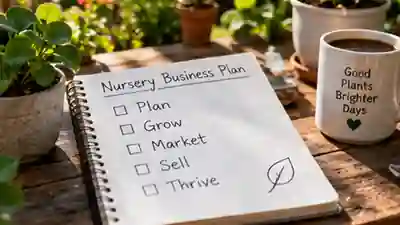
A nursery business can turn plant skill into a steady source of income. The best start is simple. Know what you will grow, who will buy, and what each sale must earn.
This guide gives you the main parts of the plan. Each part can later become a deeper guide.
Know your buyer
Start with the buyer, not the plant list. A home owner, garden shop, landscaper, and farm may want very different stock.
Talk to real buyers. Ask what they buy, when they buy, and what is hard to find.
Choose a simple business model
You may sell retail, wholesale, online, at markets, or by pickup. Each model needs a different mix of time, space, and service.
- Pick one main buyer group first.
- Choose a short list of plants.
- Set a clear way to take orders.
- Keep the first sales plan easy to run.
Plan costs before you buy
List the cost of plants, seed, pots, mix, water, tools, space, labels, fees, and labor. Add a small cash buffer for loss and slow sales.
A basic budget can stop you from buying too much stock too soon.
Check legal and plant rules
Business, tax, zoning, and plant rules may apply. The rules depend on where you live and what you sell.
Check them before you spend a lot on stock or site work.
Build a repeatable grow plan
Use a crop list and a simple calendar. Mark when you start, pot, feed, prune, and expect to sell each crop.
Good records help you know which plants earn well and which ones cost too much time.
Sell, learn, and adjust
Start with a small sales test. Track what people ask for, what sells fast, and what they leave behind.
Then use that data to shape the next crop. A strong nursery business grows from clear facts and steady care, not from guesswork.